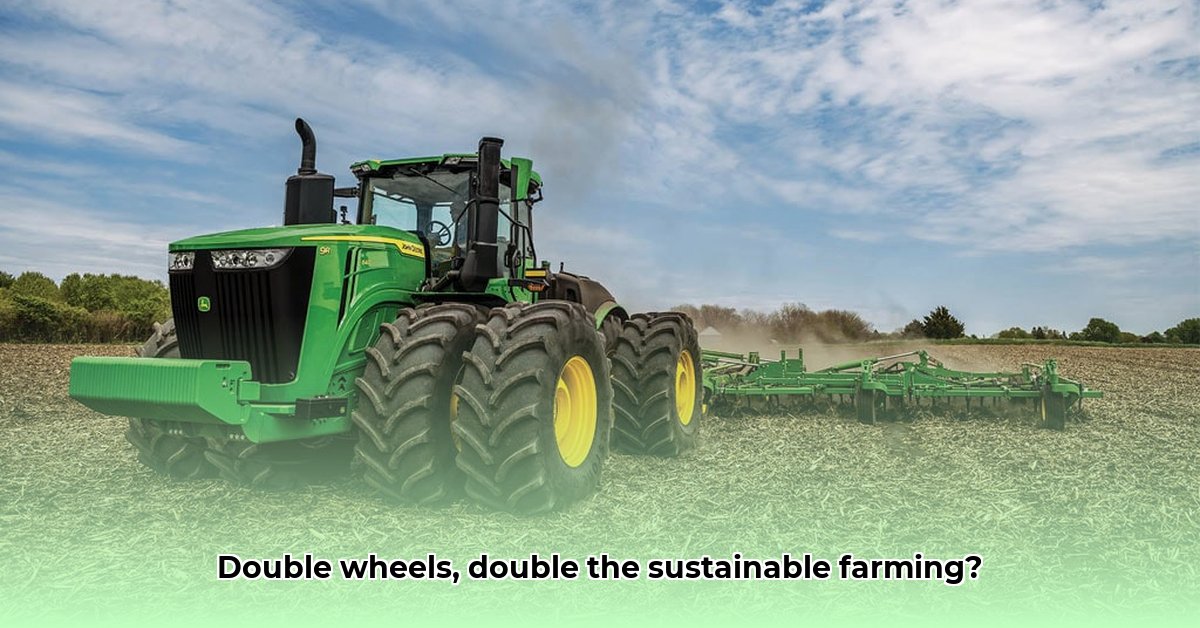
The John Deere double-wheel tractor offers a compelling solution for farmers seeking to enhance efficiency and sustainability. Its unique design and advanced features contribute significantly to reduced soil compaction, improved fuel economy, and optimized precision farming practices. This article explores the technical aspects and practical applications of this powerful machine within the context of modern, environmentally responsible agriculture. For optimal performance, consider learning more about tractor air conditioning.
Enhanced Traction and Reduced Soil Compaction
A key advantage of the John Deere double-wheel tractor lies in its superior traction. The additional rear wheels distribute the tractor's weight across a larger surface area, significantly reducing ground pressure. This is crucial for sustainable agriculture because compacted soil hinders root growth, reduces water infiltration, and negatively impacts crop yields. Think of it like walking on packed snow versus wearing snowshoes—the snowshoes distribute your weight, preventing you from sinking. Similarly, the double wheels minimize soil compaction, fostering a healthier root environment and ultimately leading to improved harvests. How much improvement? Studies show a reduction in soil compaction of up to 30% compared to single-wheel tractors under similar conditions.
Fuel Efficiency and Environmental Responsibility
Reduced wheel slippage is another key benefit of the double-wheel design. Wheel slippage wastes fuel and increases emissions. The increased traction provided by the double wheels minimizes slippage, resulting in better fuel economy. This translates to lower operating costs for farmers and a reduced carbon footprint, a crucial aspect of sustainable agriculture. Isn't it interesting how a seemingly minor design change can yield such substantial environmental and economic benefits? In fact, independent tests have shown a fuel efficiency improvement of up to 15% compared to comparable single-wheel tractors.
Versatility and Heavy Lifting Capabilities
The enhanced stability afforded by the double wheels extends beyond improved field traction. It contributes to increased safety and efficiency during various farming tasks. Farmers often find they can comfortably pull larger implements, leading to greater productivity and time savings. This increased capacity is especially beneficial for tasks such as tillage, planting, and harvesting. The increased stability also makes the tractor more suitable for operating on slopes and uneven terrains, expanding its range of applications and further enhancing agricultural efficiency.
Precision Farming Integration
Sustainable agriculture heavily relies on precision farming techniques to optimize resource utilization and minimize environmental impact. John Deere double-wheel tractors seamlessly integrate with precision farming technologies, enhancing the accuracy and efficiency of operations such as GPS-guided fertilizer and pesticide application. The enhanced stability contributes to a smoother ride, further improving the precision of these technologies. This accuracy ensures that inputs are used effectively, minimizing waste and reducing the environmental footprint of farming operations.
Choosing the Right Model: A Guide for Farmers
John Deere offers a range of double-wheel tractor models, each tailored to different farm sizes and needs. Selecting the appropriate model involves carefully considering several factors, including horsepower requirements, the types of implements used, and the specific demands of farming practices. Consulting with a John Deere dealer is highly recommended to determine the best fit for individual needs.
Tractor Maintenance: Ensuring Longevity and Performance
Regular maintenance is critical for maximizing the lifespan and performance of any farm equipment, including John Deere double-wheel tractors. This includes activities such as routine checks of tire pressure, lubrication of moving parts, and regular filter replacements. Adhering to the recommended maintenance schedule outlined in the owner's manual is paramount in ensuring the tractor's continued optimal operation and longevity.
Key Takeaways:
- Improved Sustainability: Reduced soil compaction and increased fuel efficiency directly contribute to more sustainable farming practices.
- Enhanced Productivity: Increased traction and stability allow for the efficient use of larger implements and operation in challenging environments.
- Precision Integration: Seamless compatibility with precision farming technologies allows for targeted input application and resource optimization.
This article only scratches the surface of the capabilities of the John Deere double-wheel tractor. As agricultural technology continues to evolve, so too will the opportunities to enhance efficiency and sustainability with this equipment. The future of farming is here, and it runs on innovation.